Physician education
Explain the clinical problem and treatment approach so the conversation can focus on the evidence and its relevance to the patient population.
Develop a scientific education program that helps physicians connect the treatment rationale with the clinical evidence. We plan the learning objectives and create the scientific video, interactive explanation, and scientific report and literature review with two publication-quality figures, with a sourced script and agreed review by your team or designated experts.
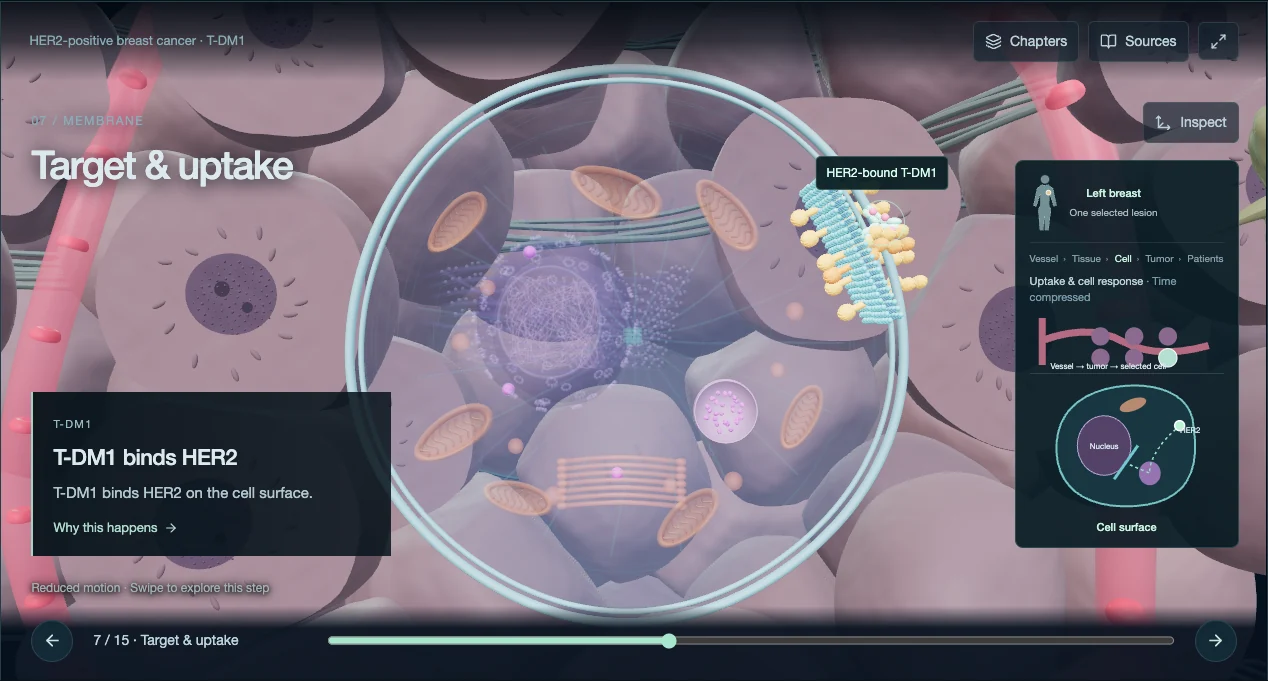 Explore the T-DM1 mechanism ↗
Start with the questions physicians need answered, then give each part of the program a role: a film to introduce the science, an interactive resource to examine it and figures to support discussion. Agree on learning objectives and a simple way to assess understanding or collect feedback.
Explain the clinical problem and treatment approach so the conversation can focus on the evidence and its relevance to the patient population.
Give medical teams an interactive resource for discussing specific mechanism steps and the sources behind them.
Carry the same reviewed explanation into videos, presentations and figures, with study context and references available.
A typical program combines these outputs with an audience-needs brief, objectives, a sourced script and storyboard, and agreed scientific review. The video is roughly 3 minutes. The report includes a focused literature review of the mechanism, clinical evidence and open questions, with two publication-quality figures. Audience-specific versions and a simple evaluation component are agreed in the scope.
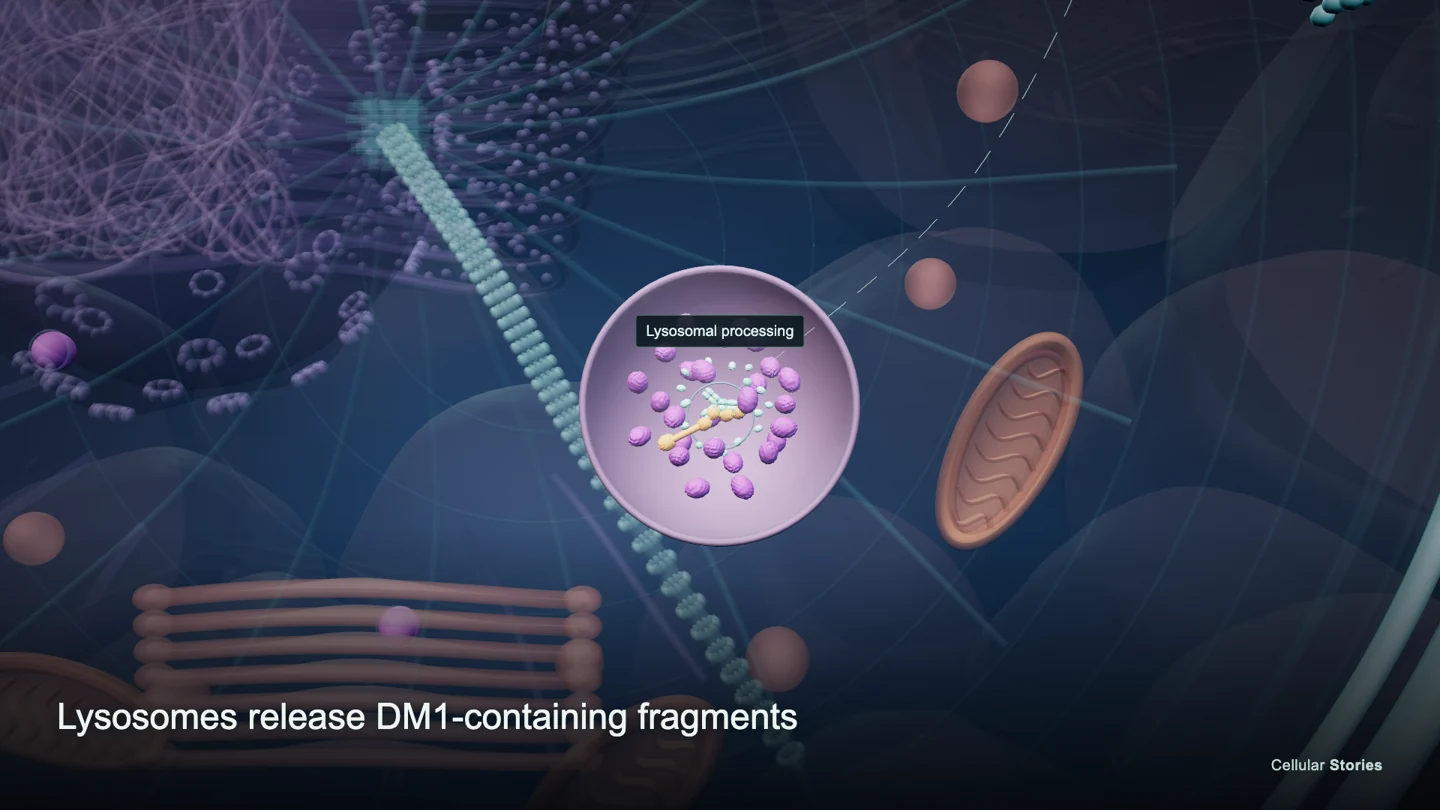 Watch the scientific film ↗01 · Scientific video
A narrated introduction to unmet need, mechanism and clinical results for physician education.
Try the T-DM1 interactive example ↗02 · Interactive websiteAn explorable explanation for scientific exchange, with chapters, source notes and inspection controls.
Receive a focused, referenced scientific report and literature review covering the mechanism, clinical findings and open questions, including two publication-quality figures. Reuse those figures in decks and educational resources, with captions, references and editable SVG, vector PDF and PNG exports. The examples above show the figure format, not a complete report.
Independent educational demonstrations, not commissioned client work or manufacturer endorsements. Existing example lengths vary. Program scope and responsibilities are agreed before production.
We agree on the audience, learning objectives and evidence with your team, then develop the script, storyboard and visuals through defined scientific review points. Mechanism illustrations and measured outcomes remain distinct.
Agree on the questions to answer, evidence, intended use, deadline and program scope.
Develop the sourced script and storyboard with your designated reviewers, then produce the film, website, scientific report and literature review with two figures.
Complete the agreed reviews and audience adaptations. Scope knowledge checks or a feedback survey around the learning objectives.
Accreditation, faculty recruitment and audience distribution are scoped separately with appropriate partners when needed.
Share the therapy, physician audience and upcoming education or congress need. We will scope the learning objectives, content, scientific reviews and evaluation approach around that use.
Discuss your education program ↗James Baker · Founder · james@cellularstories.com

