A roughly 3-minute scientific video
Introduce the disease, treatment approach and available evidence before a meeting or education session, with a script tailored to your audience.
Help your audience understand the unmet need, how a treatment works and what the evidence supports. We develop scientific education programs for patients and physicians, and distinct communication programs for investors and partners, with videos, interactive websites, and scientific reports and literature reviews including publication-quality figures.
Introduce the disease, treatment approach and available evidence before a meeting or education session, with a script tailored to your audience.
Give people a resource to revisit and share after a study discussion, physician presentation or partnering meeting, with mechanism steps and supporting references available.
A focused, referenced review of the mechanism, clinical findings and open questions, including two publication-quality figures. Reuse the figures in presentations, with captions, references and editable SVG, vector PDF and PNG exports.
A typical program combines an audience-needs brief and learning objectives with a roughly 3-minute scientific video, an interactive website, and a scientific report and literature review including two publication-quality figures: mechanism and clinical evidence. The scope includes a sourced script, storyboard and agreed scientific review with your team or designated experts. Audience adaptations and a simple understanding check or feedback survey can be included in the agreed scope.
Patients need to understand the treatment they are considering. Physicians need to connect the mechanism with the clinical findings. Investors and partners need to see what makes a program different and why the next development step matters. We build the script, visual detail and evidence presentation around the questions of your selected audience. Investor and partner communications have a separate brief focused on differentiation, evidence and development milestones.
Each independent example combines a treatment explanation with supporting evidence. Explore the science, then consider how the format could support your own education, trial or partnering needs. These are independent showcases; demonstration lengths and supporting materials vary.
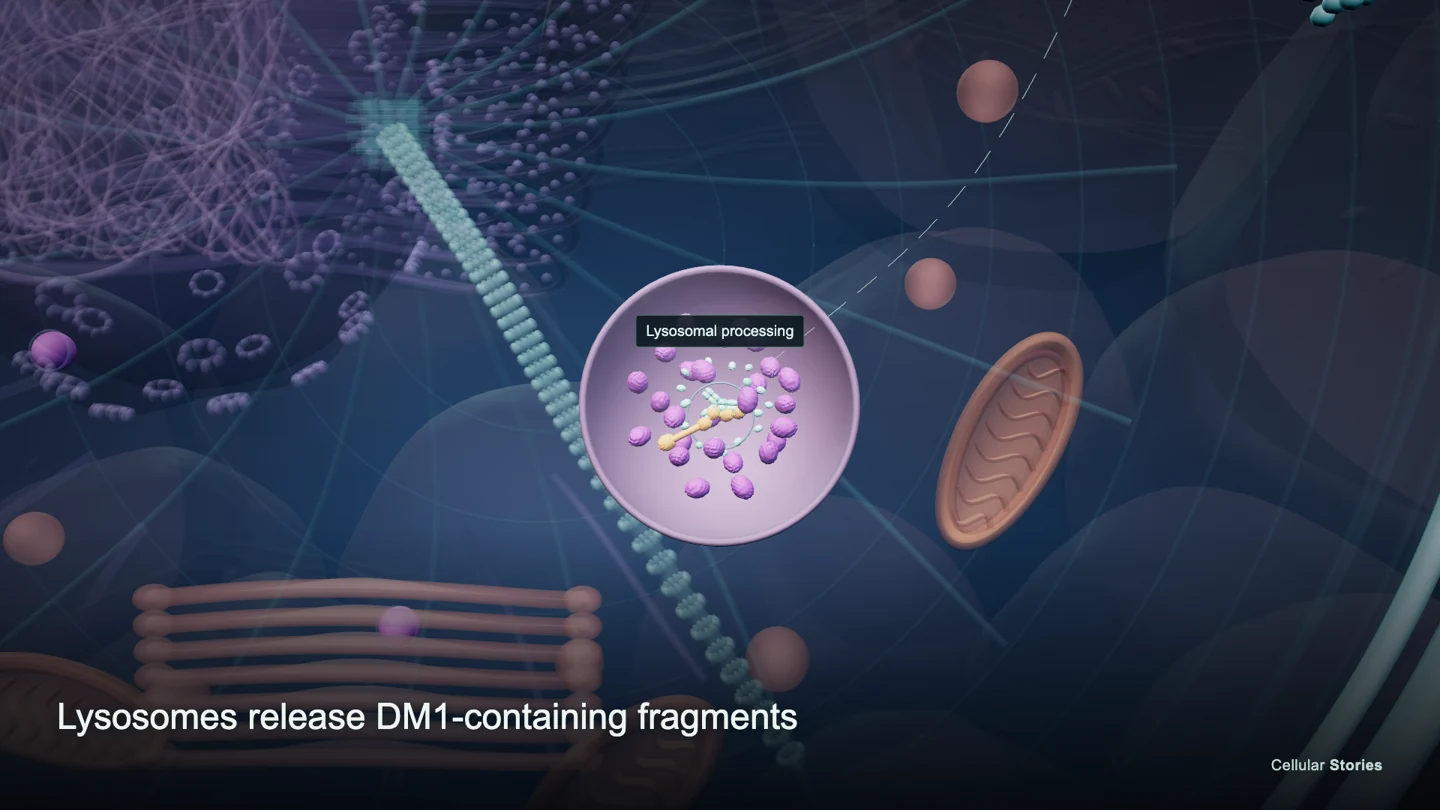 Antibody–drug conjugate · HER2
Help viewers connect HER2 recognition at the cell surface with the drug’s action inside the cell. This example follows delivery, uptake and payload processing, then presents the clinical findings and their study context.
Watch and explore T-DM1 → Small molecule · RAS(ON)
Make a three-component binding mechanism easier to understand. Follow the explanation from pancreatic tumor context to the molecular interaction, then examine the clinical evidence.
Watch and explore Daraxonrasib → Cell therapy · CD19
Explain how a living treatment is made and how it recognizes its target. Follow the cell-therapy journey, then explore the clinical findings and safety context for the population shown.
Watch and explore Tisagenlecleucel →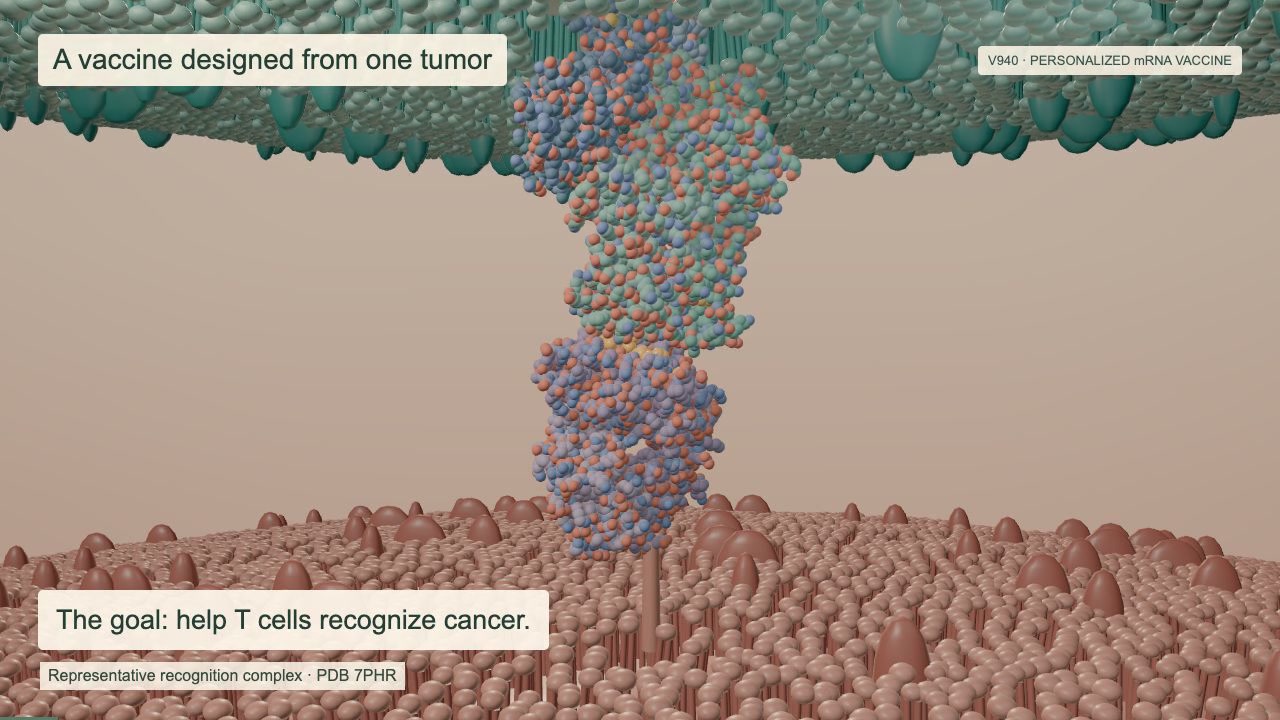 Personalized mRNA vaccine · Melanoma
Explain what makes a cancer vaccine personal to the patient. Follow target selection, mRNA delivery and T-cell recognition, then examine the evidence for V940 with pembrolizumab after melanoma surgery.
Watch and explore Intismeran autogene (V940) →Accreditation, faculty recruitment and audience distribution are scoped separately with appropriate partners when needed.
Tell us about the treatment, audience and milestone. We will scope the program objectives, scientific content, formats, review process and evaluation needs, whether for patient or physician education, or a separate investor and partner communication program.
Discuss your education needs ↗